



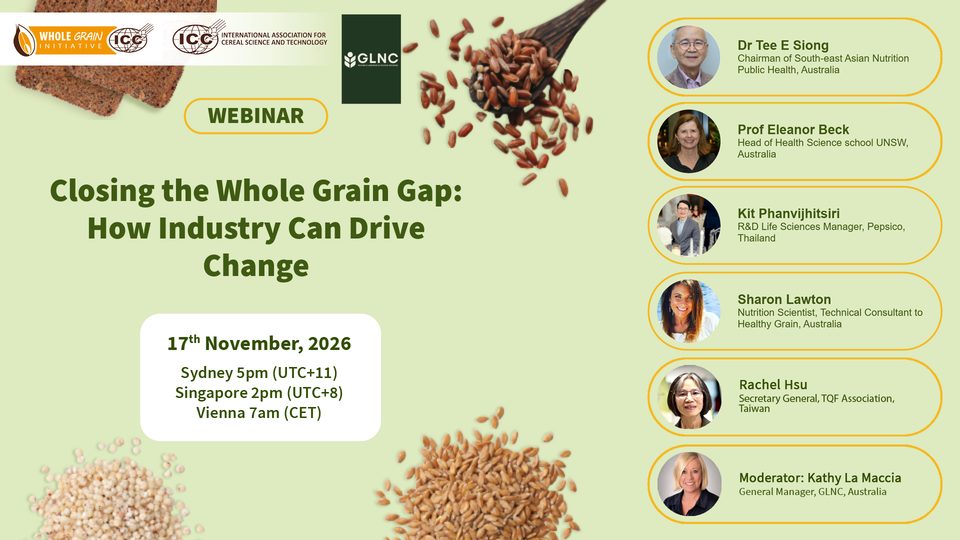
Join us for the Whole Grain Week webinar:
Consumer demand for healthier and more sustainable food choices continues to grow. At the same time, dietary guidelines increasingly prioritise whole grains, and the scientific evidence supporting their health benefits is well established. Together, these trends point to a clear priority: increasing whole grain intake.
Yet consumption remains well below recommended levels. This gap represents both a public health challenge and a tangible business opportunity across the food value chain.
Join us to explore what actions we can take to increase availability, visibility and uptake of whole grains in a profitable and consumer friendly way across the community.
Sign up here: https://attendee.gotowebinar.com/register/6224505108531692893
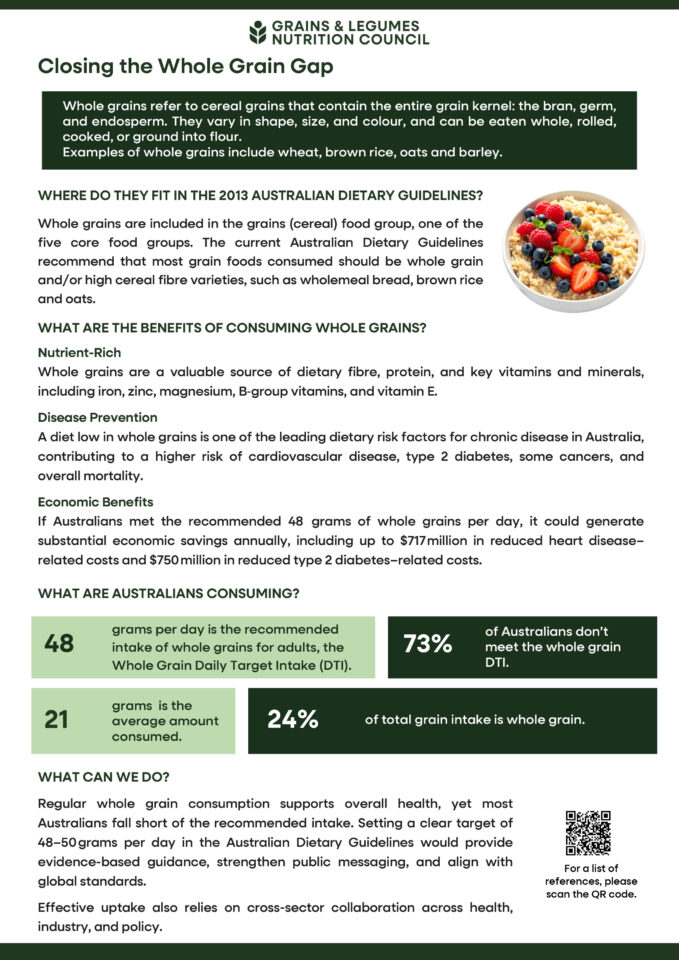
Whole Grain Fact Sheet
- Where do Whole Grains fit in the Australian dietary guidelines?
- What are the benefits of consuming whole grains?
- What are Australians consuming?
Get the 2026 Whole Grain facts.
How Many Whole Grains Should You Be Eating?
Whole grain requirements vary depending on your age and stage.
- Children aged 1-3 years: 24 grams per day
- Children aged 3-8 years: 32-40 grams per day
- Children over 9 years and adults: 48 grams per day

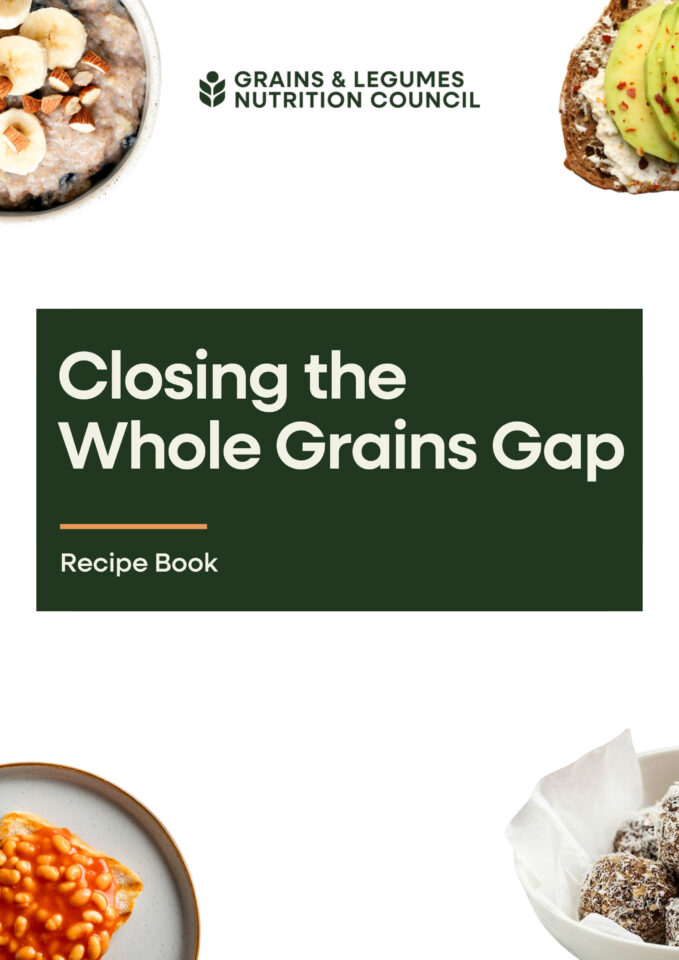
Closing the Whole Grains Gap Recipe eBook
Grains are the everyday champions of a balanced diet. This eBook is packed with practical advice and delicious recipes to make eating whole grains easy, enjoyable, and delicious.
Inside you’ll find:
- Easy, family-friendly recipes
- Whole grain health facts explained
- Inspiration for making sustainable food choices
About Whole Grain Week
Whole Grain Week is GLNC’s annual celebration of the power of whole grains, this year running from 16th to 23nd November.
This year’s theme is Closing the Whole Grains Gap. Join us to explore what actions we can take to increase availability, visibility and uptake of whole grains in a profitable and consumer friendly way across the community.